Bath robes · Fabric guide
Linen or Cotton Terry? Understanding Bathrobe Fabrics
A bathrobe is often chosen at the precise moment when judgment is least important: just after a shower, when the mirror has fogged and the day has yet to make its demands. But the fabric matters. Linen and cotton terry offer different answers to the same domestic question: how should a robe feel when it meets damp skin?
Published October 27, 2026
One robe seems to say, Stay a while. The other says, You are already nearly dressed. Cotton terry, with its small loops and generous surface, tends toward the first proposition: warm, absorbent, and reassuringly substantial. Linen, woven from flax, makes a quieter case for air, movement, and a feeling of lightness. Neither is simply better. The more useful question is which fabric suits the routine—and the person—wearing it.
Bathrobe fabrics are sometimes discussed as though the fiber alone determines the experience. In practice, fiber is only part of the story. The weave, pile, thickness, finishing, cut, and even the temperature of the bathroom influence how a robe behaves. Linen can be dense or airy; terry can be plush or surprisingly light. A sensible comparison begins with what the fabrics are built to do, and continues with what you want from the minutes after bathing.
What cotton terry is designed to do
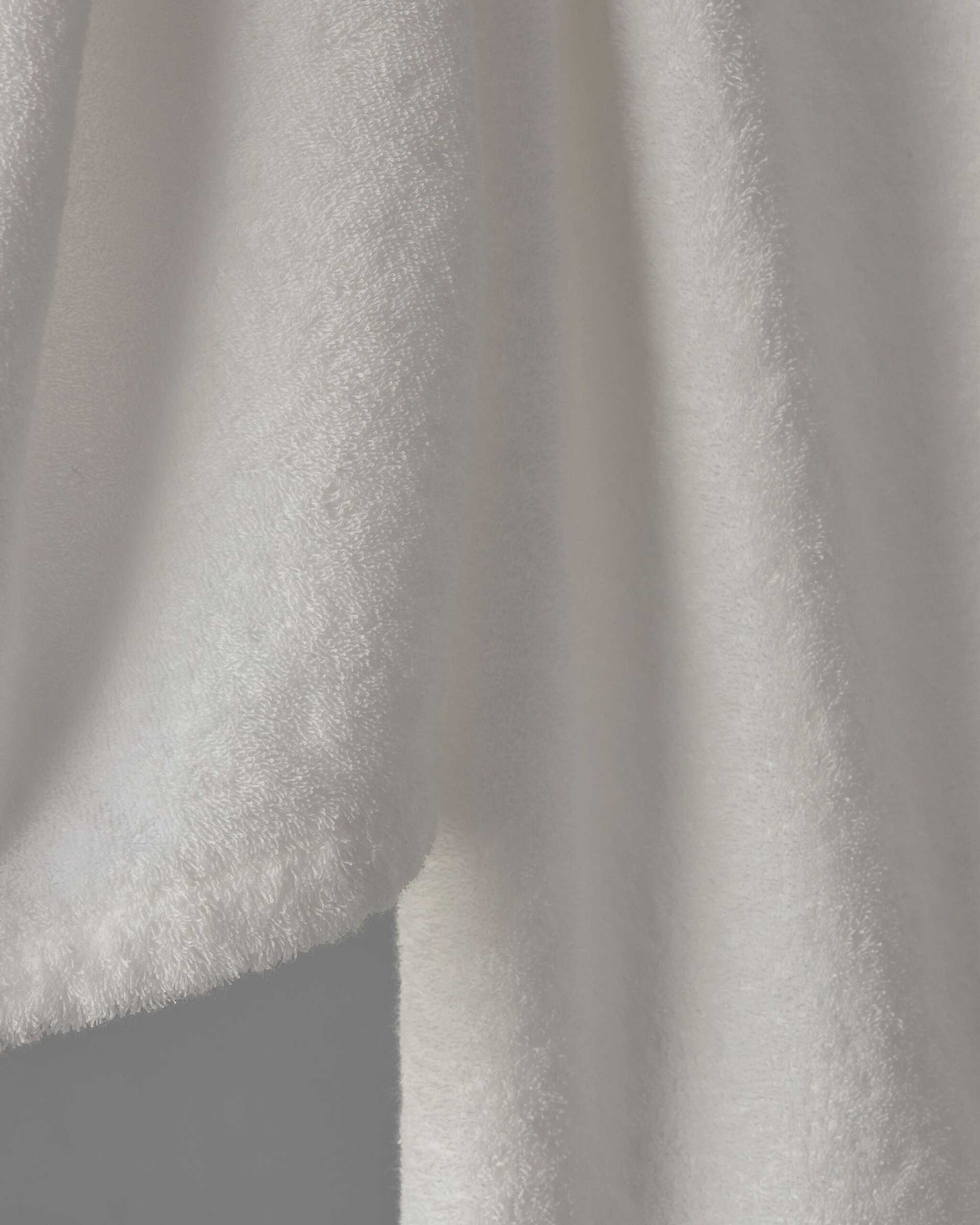
Terry cloth is recognizable by its loops. In a cotton terry bathrobe, those loops create a textured surface with plenty of contact points for water. The construction helps the fabric absorb moisture while giving it a soft, cushioned hand. Put on a terry robe after a shower and it can feel less like clothing than a portable towel, one that happens to have sleeves and a belt.
That familiar softness is not accidental. Cotton fibers are absorbent, and the looped structure gives moisture room to move into the fabric. A robe made from terry can therefore be useful when you want to dry off gradually, rather than reaching immediately for a towel. It can also add a welcome layer of warmth in a cool room or during an unhurried morning.
Weight changes the character of the experience. A thick, high-pile robe may feel enveloping, but it can also become heavy when damp and take longer to dry. A lighter terry construction may offer less of that enveloped sensation while being easier to wear around the house. Descriptions such as “plush” and “lightweight” are useful, but they do not replace the practical questions: how warm is the room, how much water should the robe absorb, and where will it hang between uses?
In a household where a robe is worn straight from the shower, absorbency may be its principal virtue. In another, where the robe is mainly a cover-up for breakfast or an evening routine, the same heavy pile may feel unnecessary. Terry is not inherently a winter fabric, but density and pile can make a particular terry robe especially comfortable in cooler conditions.
What linen brings to the routine
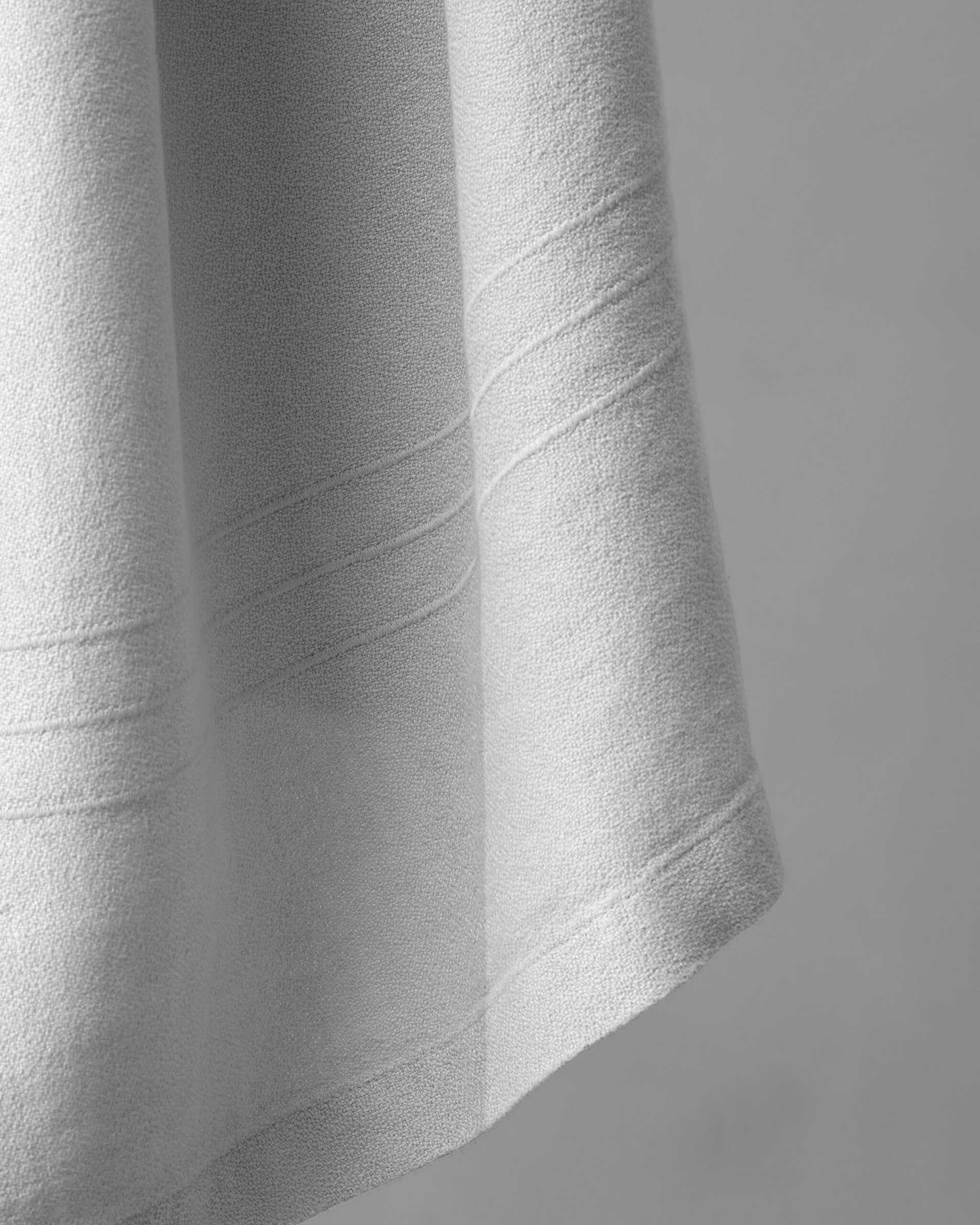
Linen begins with flax and generally has a smoother, less looped surface than terry. It is often lighter in the hand and more open in appearance, qualities that can make a linen bathrobe feel breathable and easy to move in. Rather than wrapping the wearer in a thick layer, it tends to provide coverage without as much bulk.
That lightness can be useful in warm climates, heated bathrooms, or homes where a robe is worn for a short interval before dressing. Linen also suits people who dislike the sensation of a heavy garment settling against the shoulders. Its texture has a natural irregularity—small variations that give the cloth a relaxed rather than perfectly uniform appearance. Depending on the weave and finish, linen can feel crisp at first and soften with use and laundering.
It is worth distinguishing “quick-drying” from “instantly dry.” Linen robes may feel less waterlogged than a dense terry robe, particularly when the garment itself is relatively lightweight. But actual drying time depends on thickness, construction, humidity, ventilation, and how thoroughly the robe was exposed to moisture. A robe hung in a crowded, damp bathroom will have a different life from one given space and air.
Linen is also absorbent, though a robe’s capacity to take up moisture is influenced by its weave and weight. It should not be assumed that every linen robe is intended to replace a bath towel. Some are best understood as light post-bath coverage: comfortable after drying with a towel, or during the transition from bathroom to bedroom. Others, with a more substantial cloth, can serve a broader role.
Absorbency, warmth, and the feel of weight
For many people, absorbency is the deciding factor. If the robe is expected to take the place of a towel, cotton terry is often the more straightforward choice. Its loops are made for moisture management, and its surface offers the familiar, towel-like contact that many people associate with stepping out of a bath or shower. A linen robe may absorb moisture too, but its lighter, flatter construction often gives a different sensation and may not feel as immediately towel-like.
Warmth is not quite the same thing as weight, though the two can overlap. A thick robe may retain more warmth and feel cozy in a chilly room. But a lighter robe can still provide comfortable coverage, particularly when the wearer is already warm from a shower. If you tend to overheat, or live somewhere warm, the airy character of linen may be more appealing than a dense terry pile. If you value a cocooning layer, terry may better fit the picture.
There is also the question of how a garment feels when it is damp. Terry can become heavier as it absorbs water, a trade-off for its towel-like performance. Linen’s less bulky construction may feel easier to wear during a short routine, but it may not deliver the same plush sensation. The difference is not merely technical. It is the difference between being wrapped up and being lightly covered.
A practical comparison
- Choose cotton terry if: you want a robe with a distinctly towel-like feel, value absorbency, enjoy softness and warmth, or often wear your robe immediately after bathing.
- Consider linen if: you prefer a lighter layer, want a more breathable feel, live in a warm environment, or wear a robe mainly for coverage rather than drying.
- Look beyond the fiber label if: you are sensitive to weight, need the robe to dry quickly between uses, or have specific laundering preferences. Weave, finishing, and garment construction matter.
These are tendencies, not laws. A thin terry robe may be less warm than a dense linen one; a heavy linen garment may feel more substantial than its reputation suggests. Product descriptions can help, but when possible, assess the fabric itself. A useful robe is not a category label. It is a particular cloth, cut in a particular way, doing a particular job.
Care begins with the label
Good robe care is less glamorous than choosing a fabric and more consequential over time. Always begin with the garment’s care instructions: fiber blends, dyes, construction, and finishing treatments can call for different approaches. Avoid treating every cotton terry robe as though it were an ordinary bath towel, or assuming that every linen piece should be handled identically.
For cotton terry, excessive detergent or fabric softener can affect the way the loops behave. Softener may leave a coating that reduces absorbency, so a robe that begins to feel slick or seems less effective may benefit from a careful wash routine suited to its label. Avoid overloading the machine; dense garments need room to rinse properly. If tumble drying is permitted, moderate heat is generally kinder to fibers than prolonged high heat. Remove the robe when dry rather than leaving it to bake in the drum.
Linen care also depends on the maker’s instructions, but gentle washing and prompt attention to drying are sensible habits. Linen can wrinkle; that is part of its character, not necessarily a defect requiring an emergency with the iron. If the robe is designed with a relaxed finish, a little rumpling may be entirely at home. Air circulation matters for both fabrics. Hang a robe so that it can dry rather than folding it damp over a hook or leaving it in a humid heap.
Between wears, allow the garment to dry fully. A robe that remains damp for too long is less pleasant to put on and more likely to develop stale odors. In a small bathroom, moving it to a better-ventilated room may make a noticeable difference. Washing too frequently can wear fabric; washing too infrequently can leave it less fresh. The right rhythm depends on use, climate, and whether the robe is worn over dry skin or directly after bathing.
The construction details worth noticing
When comparing bathrobe fabrics, inspect more than the main cloth. A shawl collar may add a little warmth around the neck; pockets can make a robe more useful for lounging; a belt should sit securely without pulling the garment out of shape. Sleeve length, robe length, and the cut through the shoulders affect comfort as much as fiber content does. A robe can be beautiful on a hanger and oddly inconvenient in the ordinary business of reaching for a cup.
For terry, look at the density and feel of the pile. A heavier fabric may deliver more of the plushness people seek, but it will usually take up more space and may require more time to dry. For linen, consider whether the weave is fine and fluid or more textured and substantial. A garment-dyed finish can create subtle variations in tone; a crepe effect can give the cloth a distinctive texture. These details describe appearance and hand, but the care label remains the authority on washing.
Weight figures, when provided, can be informative, though they should be read in context. A fabric’s weight is not a complete measure of comfort, absorbency, or quality. A robe’s design and intended use matter. A light, well-made robe can be more useful than a heavy one if it fits the climate and the wearer’s routine.
The ordinary luxury of choosing well
The appeal of a bathrobe is that it occupies a small, forgiving interval. It is there after the water stops, before clothes resume their jurisdiction. In that interval, fabric becomes unusually noticeable: against damp skin, across the shoulders, at the cuffs where the sleeves meet the hands. A robe that feels right can make a routine more pleasant without asking to be admired.
Cotton terry and linen offer different versions of that comfort. Terry is the more absorbent, towel-like companion, often soft and substantial, with warmth built into its loops and weight. Linen is typically the lighter, airier choice, suited to coverage and movement, and especially appealing when a bulky robe feels like too much. Choosing between them is less a contest than an exercise in knowing what you want the fabric to do.
Ask when you wear the robe, how damp you expect it to become, whether you prefer warmth or ventilation, and how much room you have to dry it. If the answer is “I want to step from the shower into softness,” terry is a natural contender. If it is “I want something light to wear while the kettle boils,” linen may make more sense. If your routine includes both, there is no rule that says one robe must perform every task.
The best bathrobe is not necessarily the plushest, the lightest, or the one whose fabric name sounds most persuasive. It is the one whose weight, weave, absorbency, and care requirements suit the life it will actually lead. That may be a small decision, made in a quiet room. It is also a decision you will feel every morning.
The quick take
Cotton terry: looped, absorbent, soft, and often warm. A strong option when the robe should help dry you after a bath or shower.
Linen: generally lighter and more breathable, with a relaxed texture. A good fit when you want coverage without the bulk of a plush robe.
Either way: check the garment’s weave, weight, cut, and care instructions. Fiber names set expectations; construction and routine determine whether those expectations are met.